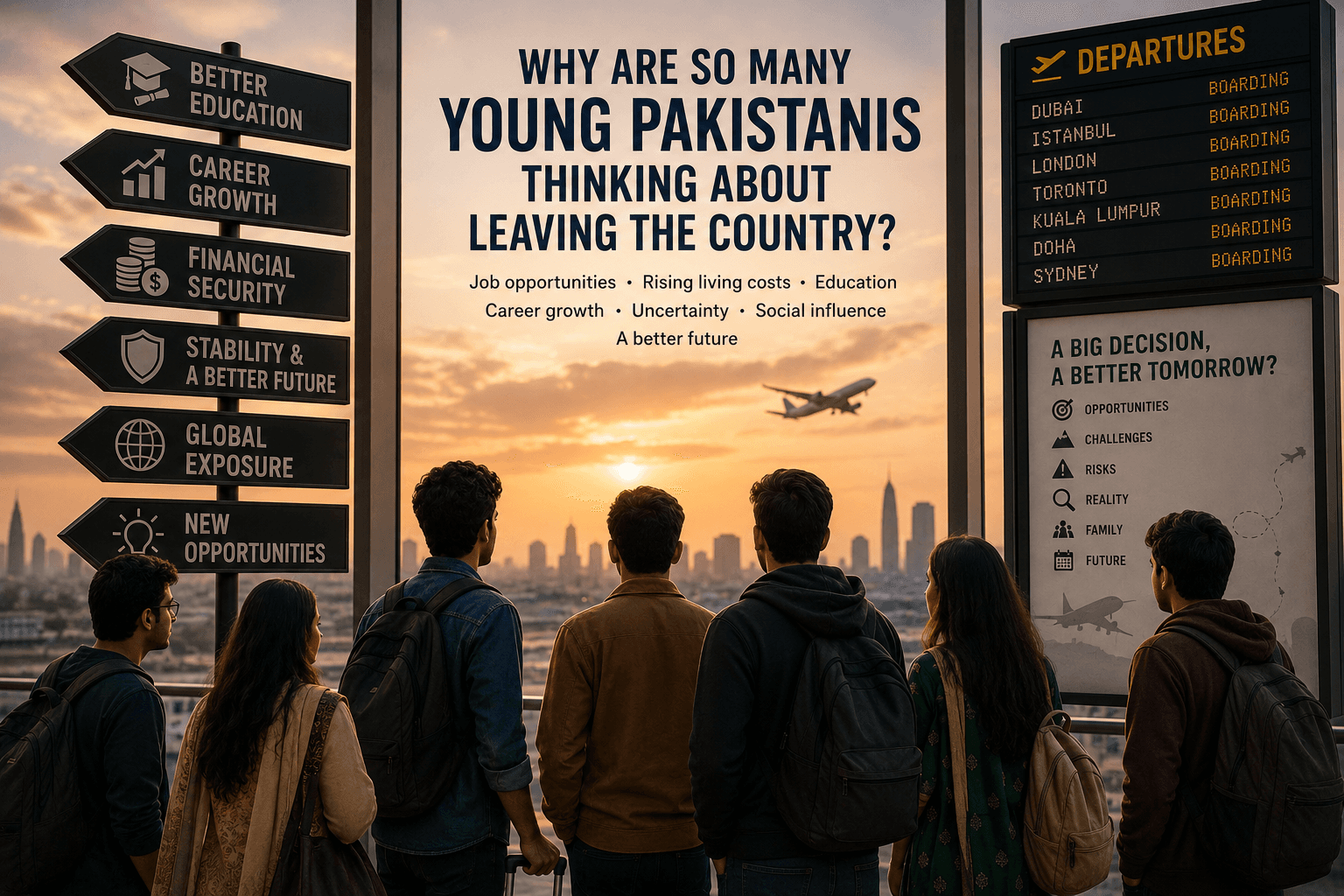
For many young Pakistanis, going abroad is no longer just a distant dream. It has become a serious option when thinking about education, employment and the future. University students, fresh graduates and young professionals increasingly consider studying, working or settling abroad.
This does not mean that every young Pakistani wants to leave. Many remain attached to their families and would prefer to build their careers at home. Yet the growing interest in migration raises an important question: Why are so many young people considering leaving Pakistan?
There is no single answer. Limited employment opportunities, rising living costs, career growth, education, uncertainty about the future and the influence of overseas relatives and friends can all shape this decision. Understanding these factors is important not only for young people, but also for Pakistan’s future.
Limited Employment and Career Opportunities
For many young Pakistanis, the first concern after completing their education is finding a suitable job. A degree may open the door to employment, but it does not always lead to a position that matches a person’s education, skills or expectations. Fresh graduates can spend months searching for work, while others accept jobs outside their field simply because opportunities are limited.
The problem is not only unemployment. Career growth also matters. Young professionals want to develop their skills, earn a reasonable income and see a clear path forward. When these opportunities appear limited at home, working abroad can seem more attractive.
This is particularly important for highly skilled workers and professionals. If they believe their qualifications can provide better opportunities elsewhere, migration becomes a practical career decision rather than simply a desire to leave the country.
Income, Inflation and Cost of Living
Having a job does not always mean having financial security. For many young Pakistanis, the challenge is to earn enough to manage everyday expenses while also thinking about savings, family responsibilities and long-term goals. Rising prices have made this balance more difficult, particularly for those at the beginning of their careers.
A young graduate may find a job after months of searching, but the salary may still not be enough to afford independent living or build meaningful savings. The cost of housing, transport, education and other basic needs can put additional pressure on a limited income.
This can make opportunities abroad appear financially attractive. A higher salary, better purchasing power and the possibility of saving more can influence a young person’s decision to seek employment overseas. For some, migration is therefore less about leaving Pakistan and more about finding greater financial security.
Education and Professional Growth Abroad
For some young Pakistanis, the decision to go abroad begins with education rather than employment. Foreign universities can offer access to specialised programmes, research facilities and academic environments that may not be easily available to them at home. Students may also see an overseas degree as a way to improve their qualifications and increase their chances of finding better employment.
Professional growth is another important factor. Young professionals often want to work in environments where they can learn new skills, gain international experience and progress in their careers. When they see limited opportunities for development in their field, working abroad can become an attractive option.
For many, the initial plan may be to study or work abroad for a few years. However, after building a career and becoming financially established, some may decide to remain there permanently. In this way, temporary migration can sometimes turn into long-term settlement.
Uncertainty About the Future
Sometimes, the decision to leave is not based on one immediate problem. It is about how young people imagine their future. When the economic and social environment feels uncertain, planning for the next five or ten years can become difficult. Young people may hesitate to make long-term commitments when they are unsure about their career prospects, income or overall quality of life.
This uncertainty can influence important decisions such as buying a home, starting a business or planning a family. Instead of asking only whether they can find a job today, many young people are also asking whether they will have better opportunities tomorrow.
For some, moving abroad appears to offer a greater sense of predictability and stability. Whether that expectation is always realistic is another question. But the perception of a more secure future can itself be a powerful reason for considering migration.
The Influence of Social Media and Overseas Networks
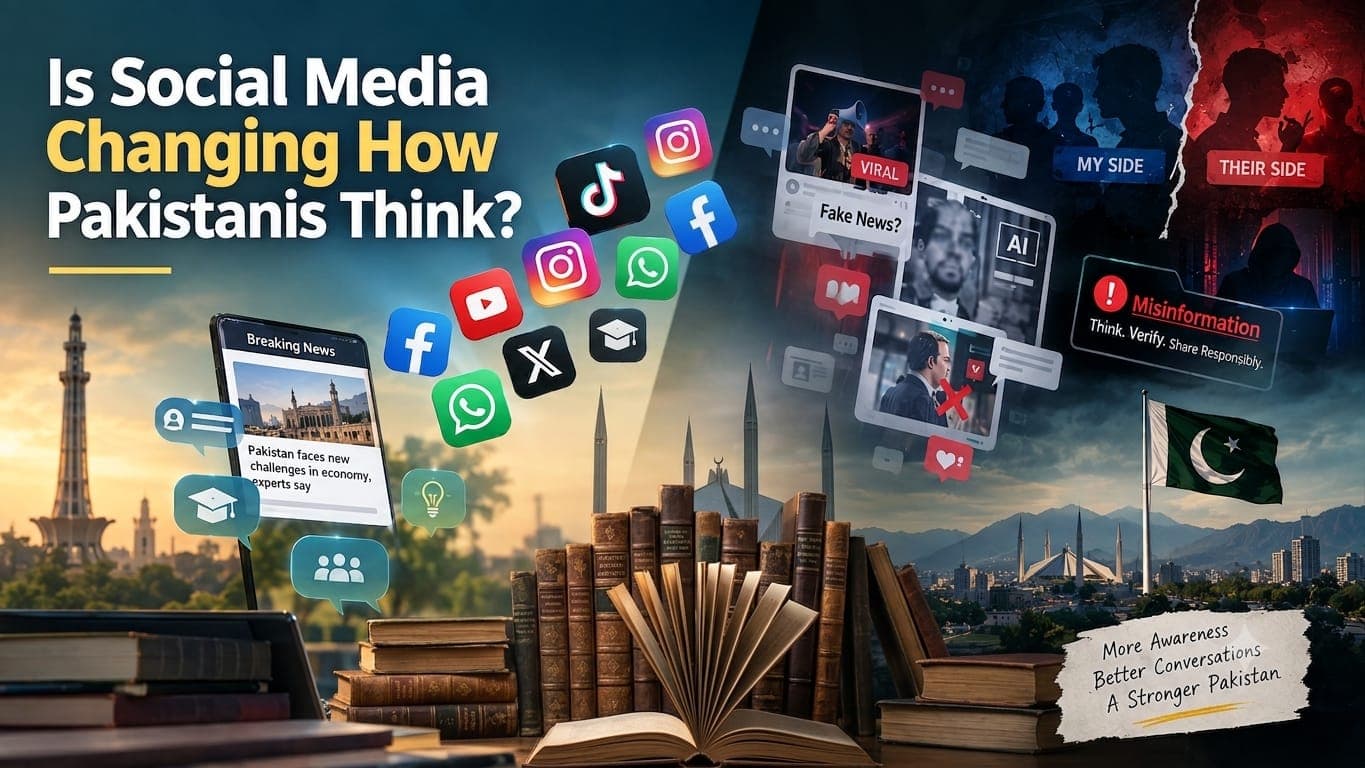
The decision to move abroad is also influenced by what young people see and hear around them. Social media regularly exposes them to people studying, working and building lives in other countries. Videos about salaries, universities, jobs and lifestyles can make overseas opportunities seem more visible and achievable than they once were.
Personal connections can have an even stronger influence. A friend, relative or former classmate already living abroad may share their experience, provide guidance or help someone understand the process of moving. For a young person who is already considering migration, such networks can make the decision easier.
However, social media rarely shows the complete picture. The difficulties of living abroad, including loneliness, high expenses, cultural adjustment and uncertain employment, may receive much less attention. What appears attractive online may therefore be very different from everyday reality.
Is Leaving Pakistan Always the Better Option?
Leaving Pakistan may offer new opportunities, but it does not automatically guarantee a better life. Moving to another country comes with its own challenges. Young migrants may face high living costs, loneliness, cultural differences and the pressure of building a life away from their families. Finding a job that matches their qualifications can also be difficult, particularly when they are unfamiliar with the local job market or face restrictions related to visas and work permits.
There is also a difference between visiting a country, studying there and building a permanent life there. What looks attractive from a distance may feel very different once someone has to manage rent, work, responsibilities and daily life independently.
For this reason, migration is not simply a choice between a good life abroad and a difficult life in Pakistan. For many young people, it is a decision involving opportunities, risks and personal circumstances.
What Does Youth Migration Mean for Pakistan?
The growing interest in migration is not only a personal matter. It can also have wider consequences for Pakistan. Pakistanis working abroad send money back to their families, and these remittances support household spending and contribute to the country’s foreign exchange earnings. Overseas Pakistanis can also bring international experience, skills and professional connections.
At the same time, the departure of educated and skilled young people can create concerns about the loss of human capital. When doctors, engineers, researchers, IT professionals and other skilled workers build their careers abroad, Pakistan may lose some of the talent it needs for its own development.
Migration, therefore, has both benefits and costs. The challenge is not necessarily to stop young Pakistanis from seeking opportunities abroad, but to create conditions in which staying in Pakistan is also a realistic and attractive choice.
Conclusion
The decision of young Pakistanis to consider leaving the country cannot be explained by a single reason. For some, it is about finding better employment and earning opportunities. For others, education, professional growth or the search for a more predictable future may play a greater role. At the same time, migration brings its own difficulties and does not guarantee a better life for everyone.
The growing interest in migration should therefore be seen as more than a personal choice. It also raises questions about the opportunities available to Pakistan’s young population. If young people can find quality education, meaningful employment, career growth and greater confidence in their future at home, fewer may feel that leaving is their only path to a better life.